Ulrich Berger · 16 October 2026
University Networks Advance Metal Forming Test Infrastructure to Reduce Material Waste in Industrial Applications
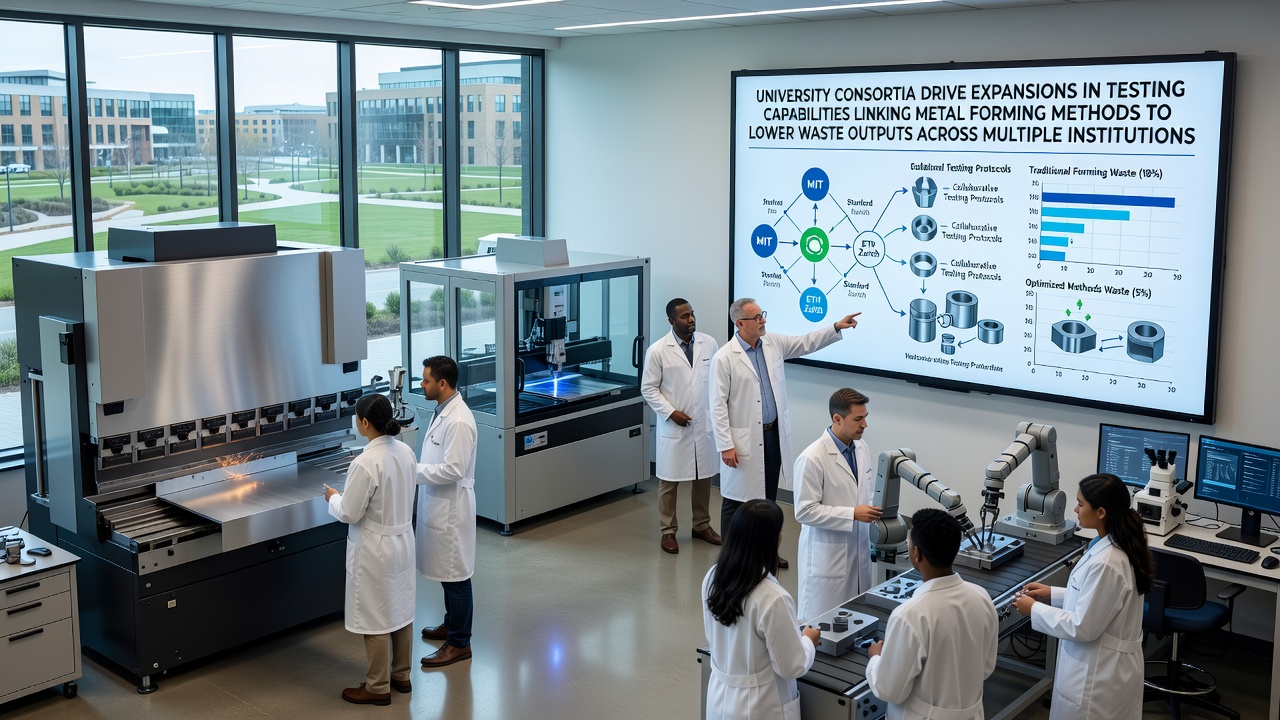
Consortia formed by universities across Europe and North America have directed resources toward expanded testing facilities that connect specific metal forming techniques with measurable decreases in material waste. These partnerships operate through shared laboratories and standardized protocols that allow data from one institution to inform processes at others. Data collected since early planning phases shows consistent patterns where optimized forming parameters correlate with lower scrap rates in forging and extrusion operations.
Expansion of Testing Capabilities Across Institutions
Facilities at participating universities now include advanced simulation software paired with high-precision measurement tools that track material flow during forming cycles. Researchers at multiple sites run parallel experiments on identical alloy batches to isolate variables such as temperature, pressure, and die design. Results feed into central databases that track waste outputs per kilogram of input material, and updates from these systems became publicly available for academic use in October 2026.
Equipment upgrades have focused on real-time monitoring sensors that capture deformation data at millisecond intervals. This level of detail reveals how minor adjustments in process parameters reduce excess material trimmed after forming. Institutions in Germany and Canada have contributed complementary datasets that cover both high-volume production alloys and specialized high-temperature materials.
Linking Forming Methods to Waste Reduction Outcomes
Studies conducted through the consortia examine closed-die forging against open-die methods under controlled conditions. Figures from joint trials indicate that refined closed-die sequences lower waste by directing material more precisely into final shapes. Extrusion tests similarly demonstrate that adjusted die geometries decrease the volume of discarded ends and surface defects.
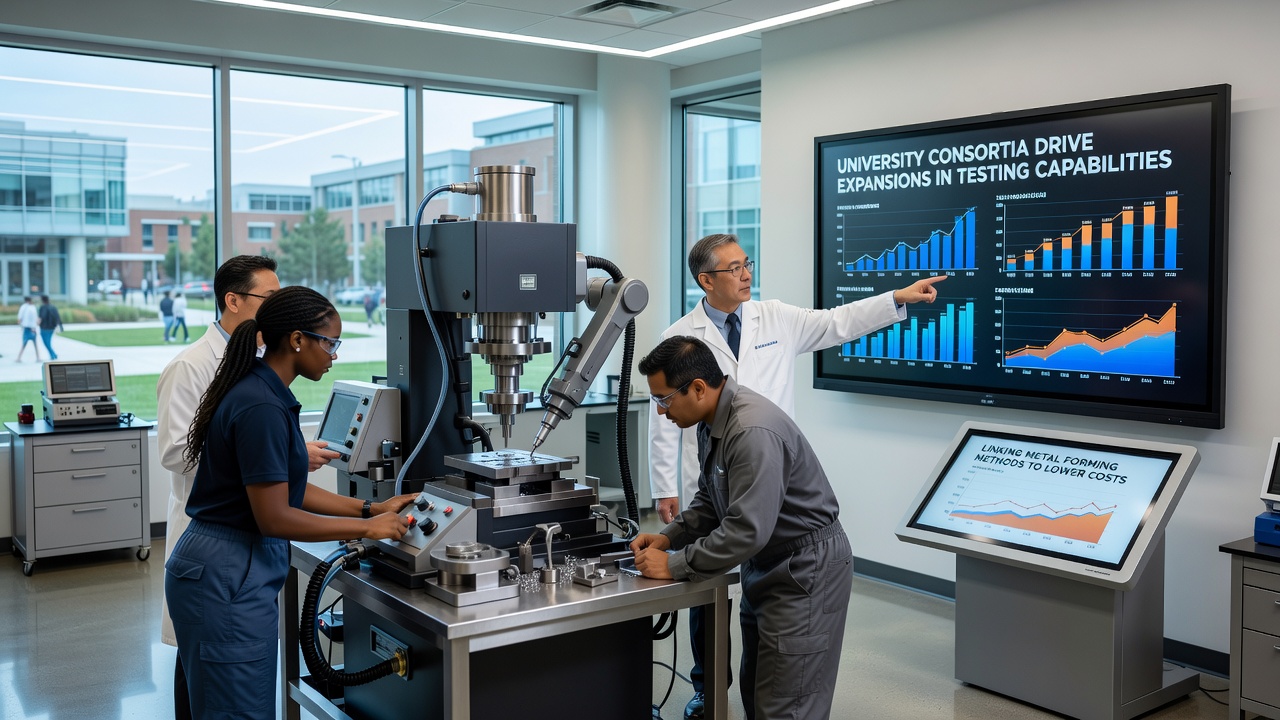
One series of experiments compared traditional rolling passes with incremental forming approaches. The incremental method produced parts with tighter tolerances that required less subsequent machining, and recorded scrap volumes dropped accordingly. These findings appear in shared reports that list exact reduction percentages across different alloy families.
Cross-Institutional Data Sharing and Standardization
Protocols developed by the consortia require each participating laboratory to follow uniform calibration standards for measurement devices. This approach ensures that waste metrics compiled in Poland align with those generated in the United States and Australia. Regular virtual meetings allow teams to review discrepancies and adjust test parameters before new rounds begin.
Publications emerging from the network cite raw data files that other researchers can download and reanalyze. Government agencies in the European Union and Canada have referenced these datasets when updating guidelines on sustainable manufacturing practices. The October 2026 release of an updated database included additional fields for energy consumption per formed component, extending the original focus on material waste alone.
Applications in Academic and Industrial Settings
Engineering departments at member universities incorporate findings into coursework that trains students on waste-aware process design. Industry partners receive anonymized summaries that highlight which parameter sets delivered the largest reductions in discarded material. Several forging companies have adapted elements of these protocols in pilot lines, and follow-up measurements confirm the expected waste decreases.
Case records from one collaborative project tracked a shift from conventional upsetting to a multi-stage sequence that incorporated intermediate annealing. The revised sequence cut end-trim losses by documented margins while maintaining mechanical properties within required specifications. Similar records from other institutions cover extrusion of aluminum profiles and precision forging of titanium components.
Conclusion
University consortia continue to scale testing infrastructure that directly ties metal forming variables to waste output measurements. Shared databases and standardized protocols enable institutions to build on each other's results, and the October 2026 data releases mark the latest step in this ongoing expansion. External references such as reports from the National Institute of Standards and Technology and the European Commission provide broader context for how these academic efforts align with regulatory and industry benchmarks on material efficiency.