Olivia Richter · 2 October 2026
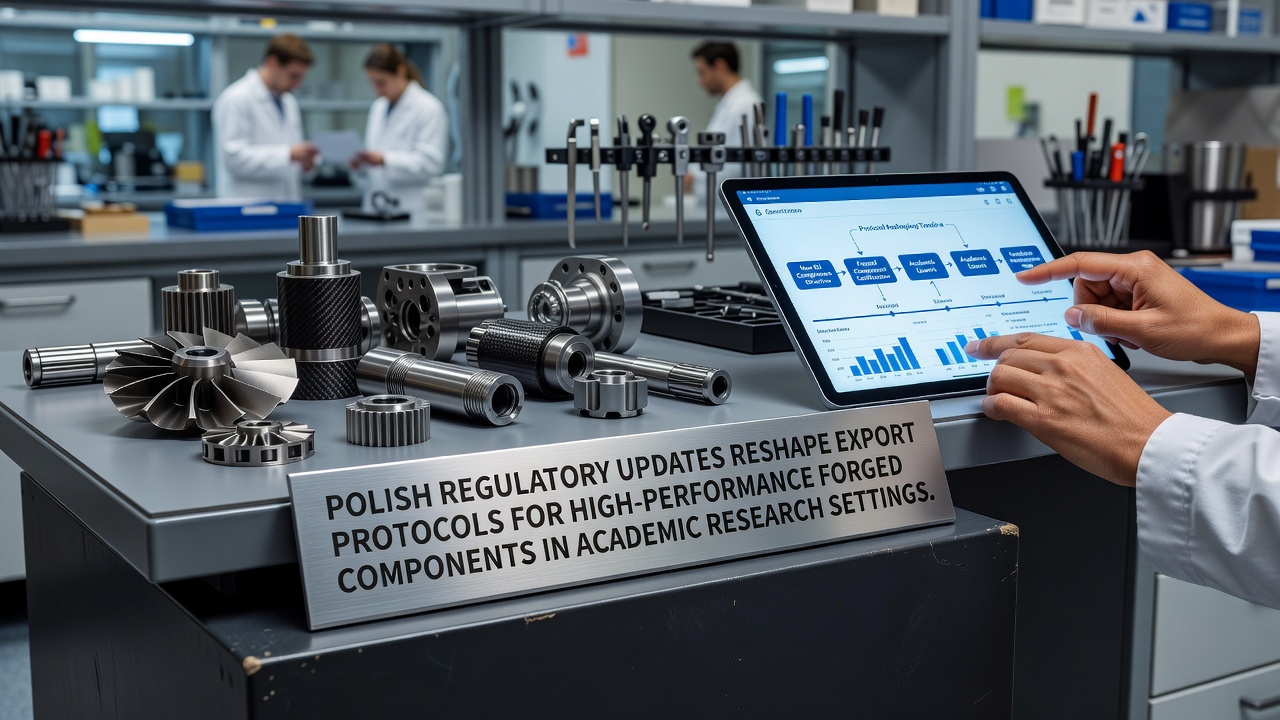
Polish Regulatory Updates Reshape Export Protocols for High-Performance Forged Components in Academic Research Settings
The Polish government introduced new export control measures in October 2026 that directly affect shipments of high-performance forged components destined for academic and research institutions, and these rules require universities and laboratories to complete enhanced documentation, obtain pre-approval from multiple agencies, and demonstrate end-use compliance before any materials leave the country.
Under the updated framework, forged parts made from advanced alloys or designed for extreme stress applications now fall under stricter dual-use classifications, which means research groups must submit detailed project descriptions, partner agreements, and security assessments to the Ministry of Economic Development and Technology as well as the Polish Customs Service.
Background on the Regulatory Shift
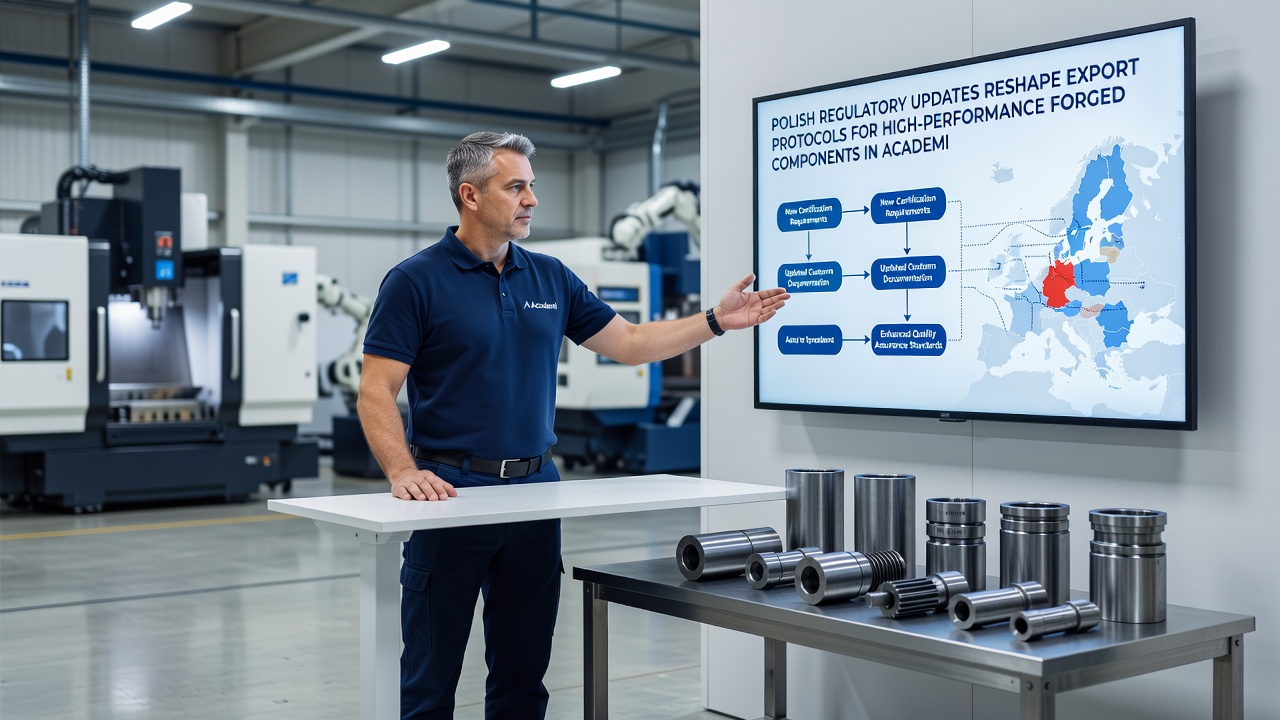
Previous export procedures allowed most academic shipments to proceed with standard commercial invoices and basic declarations, yet rising concerns over technology transfer prompted authorities to align national rules more closely with EU-wide dual-use regulations; the October 2026 amendments expand the list of controlled items to include certain forged beams, turbine blades, and structural connectors that exceed specified performance thresholds.
Observers note that the changes build on existing European Commission guidelines while adding Poland-specific requirements for academic end-users, and institutions must now register each export in a centralized digital portal that tracks component specifications, intended research applications, and recipient credentials.
Key Protocol Changes Effective October 2026
Export licenses now demand proof that the forged components will not be diverted to unauthorized military or industrial uses, and applicants must provide third-party verification of material composition along with simulation data showing how the parts will perform under research conditions; processing times have lengthened from an average of ten days to as many as forty-five days for complex applications.
Research teams that previously relied on informal university-to-university transfers must now route shipments through licensed freight handlers who carry additional insurance and maintain audit trails, and failure to meet these standards can result in seizure of the components at the border plus administrative penalties for the sending institution.
Effects on Academic Research Programs
Materials science departments at several Polish universities have reported delays in collaborative projects with partners in North America and Asia, because the new documentation requirements force teams to renegotiate timelines and budgets; one multi-year fatigue testing initiative had to postpone specimen delivery until January 2027 after the October 2026 rules took effect.
International partners face extra hurdles as well, since receiving institutions must supply letters confirming that the forged components will remain within academic settings and will not undergo reverse engineering, and these assurances must be notarized and translated into Polish before Polish authorities will issue export clearance.
Data from the Polish Export Control Agency shows that academic shipments of high-performance forged items dropped by roughly twenty-two percent in the first quarter after the regulations changed, while commercial research contracts experienced a smaller decline of approximately eight percent during the same period.
Compliance Strategies Adopted by Institutions
Universities have begun establishing internal export compliance offices that coordinate with legal counsel and technical experts to prepare the required dossiers, and several consortia of technical universities have pooled resources to create shared databases of approved material specifications that speed up future applications.
Training programs for researchers now include modules on dual-use classification, secure packaging standards, and record-keeping obligations, while some laboratories have shifted toward domestic suppliers or additive manufacturing alternatives to reduce reliance on imported or exported forged components.
According to information published by the European Commission dual-use export controls portal, member states retain flexibility to add national controls beyond the common EU list, and Poland has exercised that option for certain forged research materials.
International Context and Comparisons
Similar tightening has occurred in other jurisdictions; Canadian export authorities, for example, updated their controlled goods list in 2025 to include advanced forged aerospace parts, and Australian defense trade controls require academic users to obtain permits for components above specific strength-to-weight ratios.
Those who manage cross-border research collaborations report that harmonizing documentation across multiple regulatory regimes remains challenging, yet the Polish system now includes template forms that align with OECD guidelines on responsible research export practices, which may ease some administrative burdens over time.
Conclusion
The October 2026 regulatory updates have introduced new layers of oversight for exports of high-performance forged components used in academic research, and Polish institutions continue to adapt their procedures while maintaining project continuity through enhanced planning and inter-institutional cooperation.