Casey Günther · 30 October 2026
Polish Academic Consortia Assess Export Regulation Changes and Their Effects on Sustainable Alloy Priorities for Seismic Uses
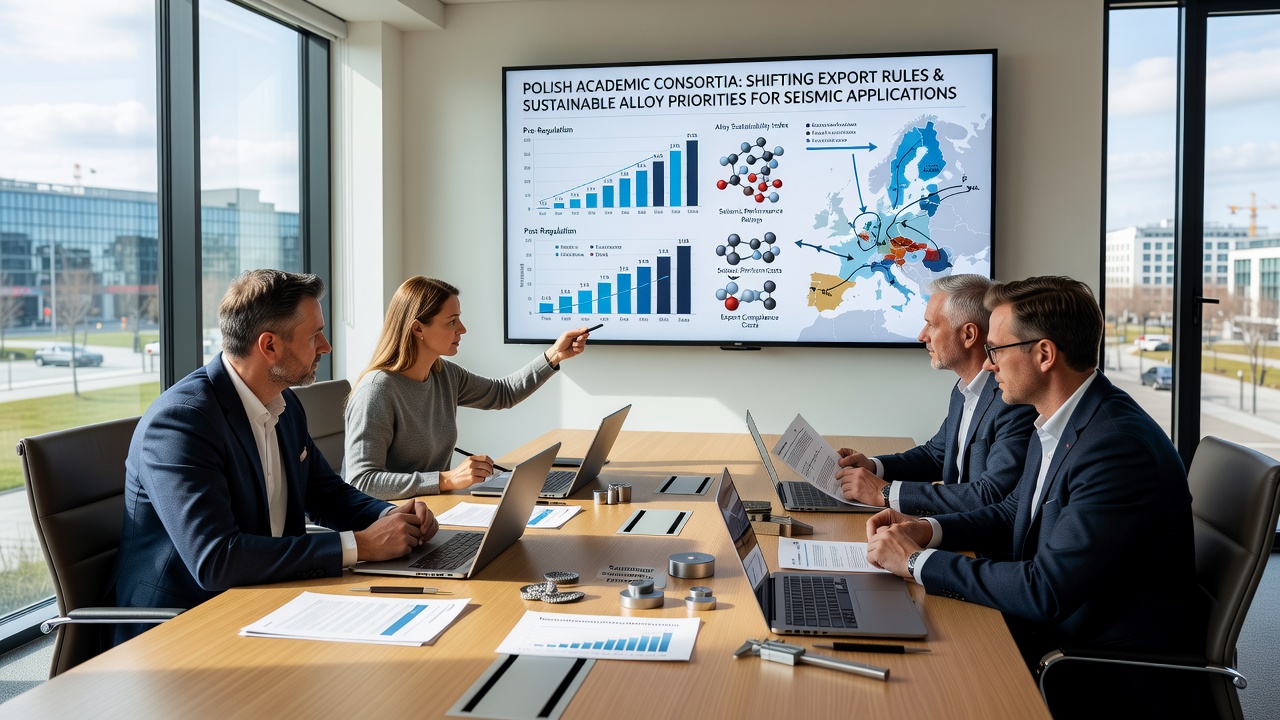
Polish academic consortia have begun systematic reviews of how recent adjustments in export regulations affect research priorities for sustainable alloys intended for seismic applications, and these efforts draw on data from multiple institutions across the country. Teams at several universities coordinate projects that track material compositions, processing methods, and performance metrics while factoring in compliance requirements that govern technology transfers and component shipments. Data from the past two years shows increased attention to alloys with reduced rare-earth content and lower carbon footprints, as export rules tighten controls on certain high-performance elements and related processing equipment.
Regulatory Shifts and Research Adjustments
Export rules updated by the European Union in 2025 introduced stricter licensing for dual-use materials and advanced metallurgical techniques, which prompted Polish groups to recalibrate their development pipelines. Researchers at consortia involving Warsaw University of Technology and AGH University of Science and Technology examined how these changes redirect funding toward alloys that rely on domestically sourced or recycled inputs. Studies indicate that projects now emphasize traceability protocols and waste-reduction strategies during forging and heat-treatment stages, because compliance documentation must accompany any potential international collaboration.
One study released in mid-2026 documented a 35 percent rise in proposals that incorporate life-cycle assessment tools, and these proposals align with new documentation standards required for cross-border research agreements. Consortia members note that export license processing times have lengthened for certain titanium and nickel-based formulations, leading teams to explore alternative compositions that maintain ductility and energy-absorption characteristics needed in seismic zones. The adjustments occur alongside ongoing work on high-temperature stability, where alloys must withstand repeated loading cycles without accelerated degradation.
Sustainable Development Strategies in Alloy Research
Polish groups integrate sustainability metrics into alloy formulation by testing blends that incorporate higher percentages of recycled steel and reduced cobalt, and these formulations undergo rigorous validation for seismic performance. Laboratory protocols now include mandatory audits of energy consumption during melting and rolling operations, with results compared against benchmarks established by international standards bodies. Evidence from pilot trials shows that modified cooling rates can cut overall process emissions by up to 18 percent while preserving yield strength above 650 MPa, a threshold frequently cited for structural elements in earthquake-prone regions.
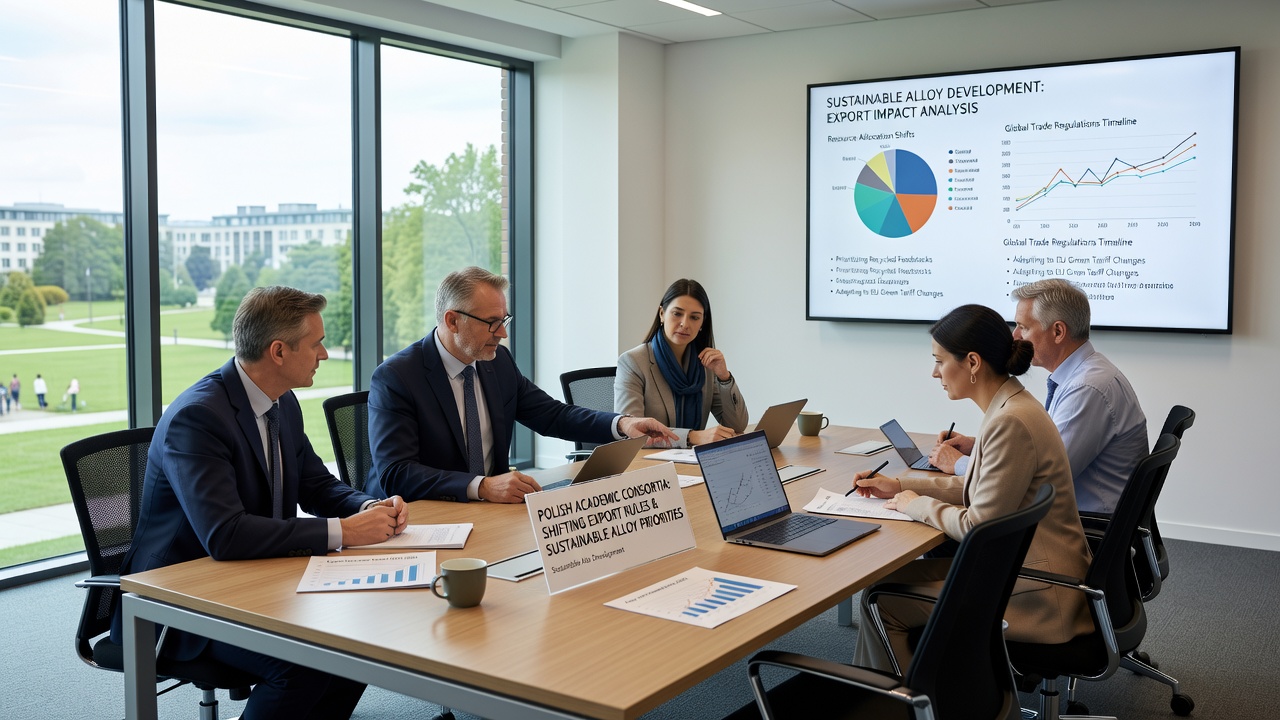
Consortia reports highlight the use of computational modeling to predict how minor additions of vanadium or niobium affect both corrosion resistance and export classification status. Teams run iterative simulations that balance mechanical properties against regulatory checklists, and they share anonymized datasets through secure academic networks. In October 2026 several consortia plan to present joint findings at a regional metallurgy conference, where participants will discuss updated export classification tables and their implications for ongoing seismic alloy trials.
Seismic Application Requirements and Testing Protocols
Alloys developed under these revised priorities must demonstrate consistent performance under cyclic loading that simulates ground motion magnitudes up to 7.5 on the Richter scale. Test rigs at participating laboratories apply variable strain rates while monitoring crack propagation and energy dissipation, and results feed directly into revised design guidelines for bridge and building components. Researchers compare outcomes against historical datasets from earlier alloy generations to quantify improvements in fatigue life and material efficiency.
Collaboration with industry partners allows scaled production trials that incorporate real-time monitoring of export-sensitive parameters such as grain-size distribution and residual stress profiles. These trials generate the technical dossiers required for license applications, and they also identify process windows that minimize scrap rates. Figures from recent pilot runs reveal scrap reduction from 12 percent to 7 percent when optimized thermomechanical sequences are applied, supporting both sustainability goals and regulatory compliance.
Cross-Institutional Coordination and Data Sharing
Polish consortia maintain shared repositories that catalog alloy compositions, processing parameters, and export classification outcomes, and access protocols ensure compliance with data-protection rules. Regular working groups review shifts in global export lists, including updates from the European Commission dual-use regulation portal, and they translate those changes into actionable research roadmaps. Additional coordination occurs with laboratories in neighboring countries to harmonize testing standards and avoid duplication of compliance efforts.
Observers note that participation in these networks has expanded to include specialists in environmental engineering and supply-chain logistics, broadening the scope beyond traditional metallurgy. Joint publications track how regulatory pressures influence the selection of characterization techniques, such as electron backscatter diffraction and ultrasonic testing, which provide the documentation needed for both scientific validation and export review.
Conclusion
Polish academic consortia continue to refine their approaches as export regulations evolve, directing resources toward alloy systems that satisfy both seismic performance criteria and sustainability targets. Ongoing trials scheduled through late 2026 will supply additional datasets that clarify the interplay between compliance requirements and material innovation pathways, and these findings will inform subsequent project planning across the participating institutions.